

Systems built
for mission.
Asgard Industries builds the systems and infrastructure required for autonomous operations.
Asgard Industries is an integrated systems engineering and industrial execution company serving air, maritime, land, space, robotics, and autonomous infrastructure programs.
One connected system
- Mission RequirementsDefined
- EngineeringControlled
- ManufacturingExecuted
- IntegrationVerified
- DeploymentCommissioned
- SustainmentMaintained
Asgard's operating model connects mission requirements to deployed and supportable physical systems: one model, from technical intent to fielded, maintained capability.
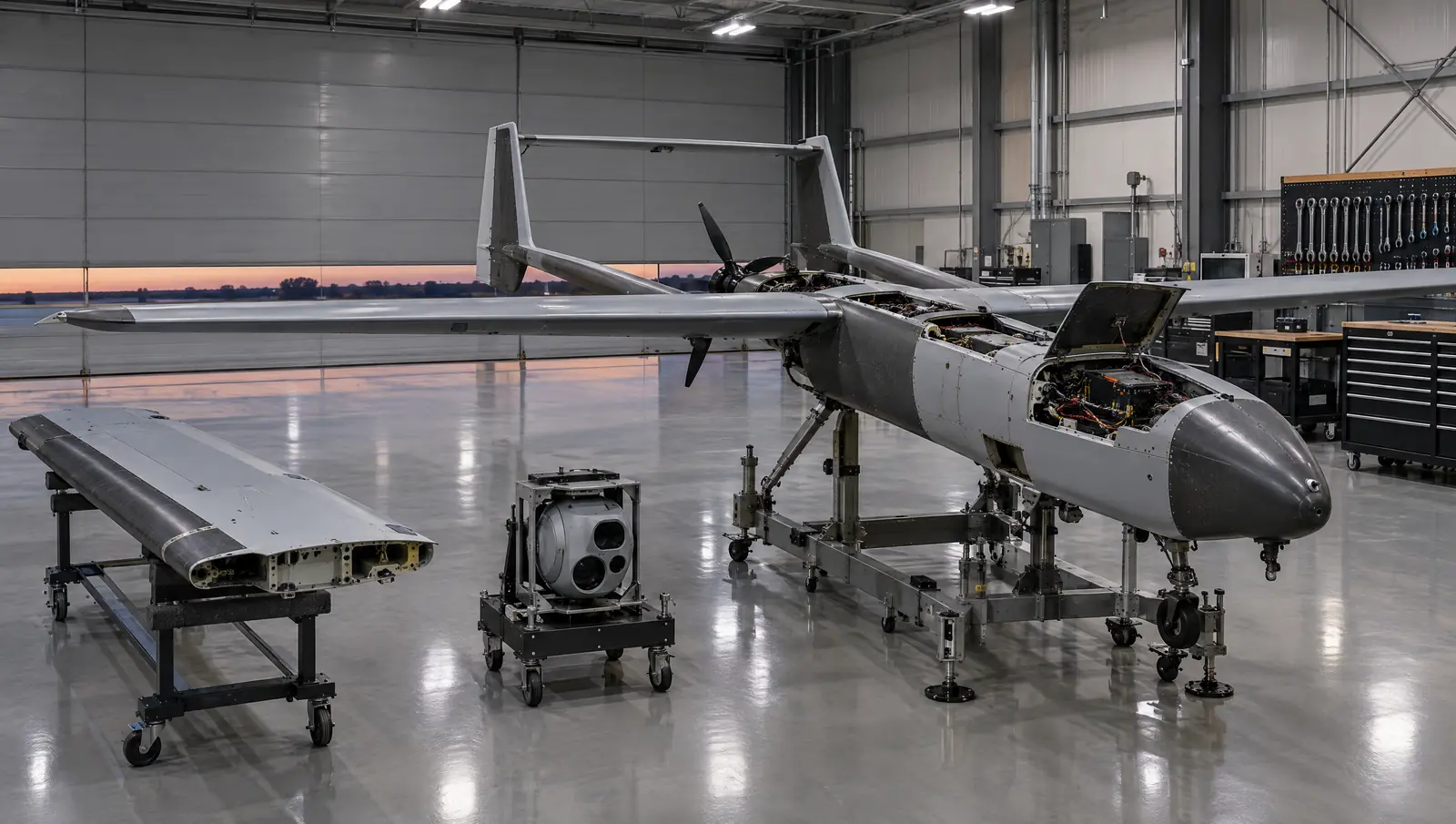
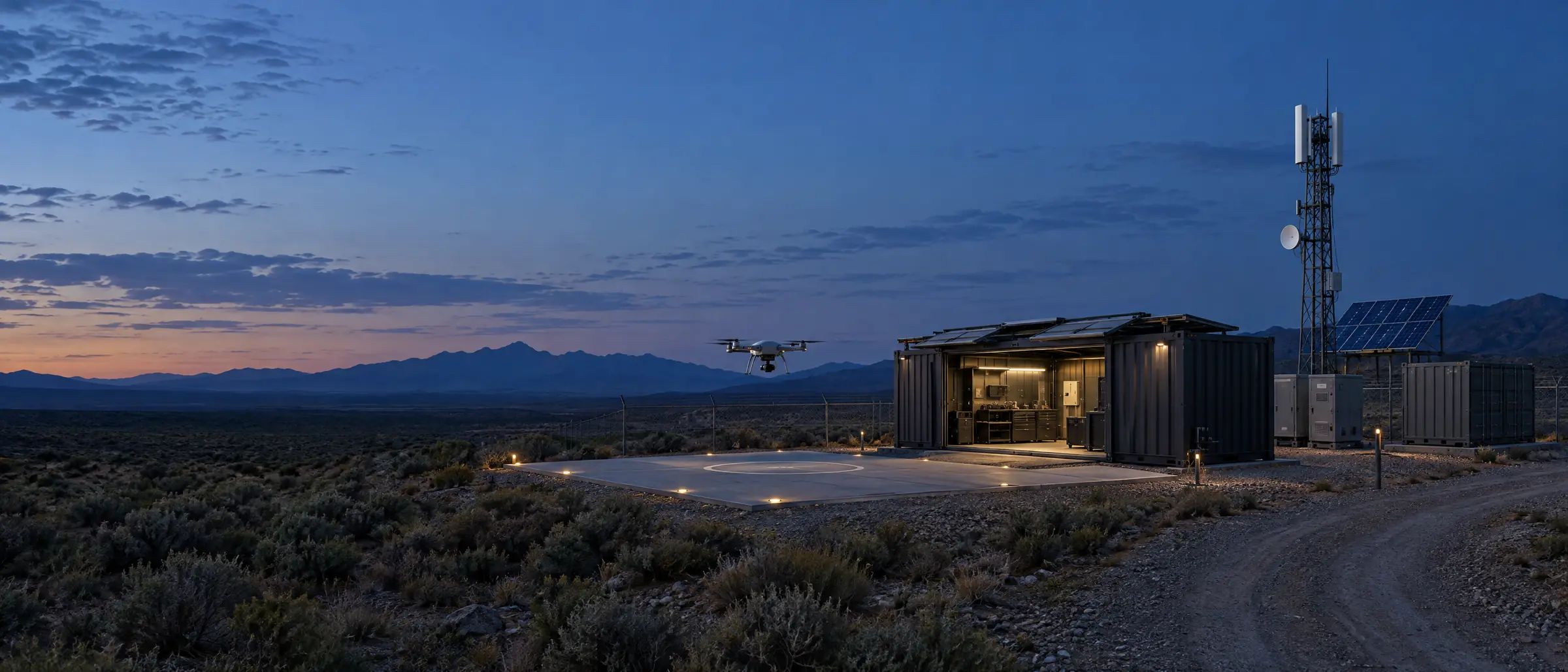
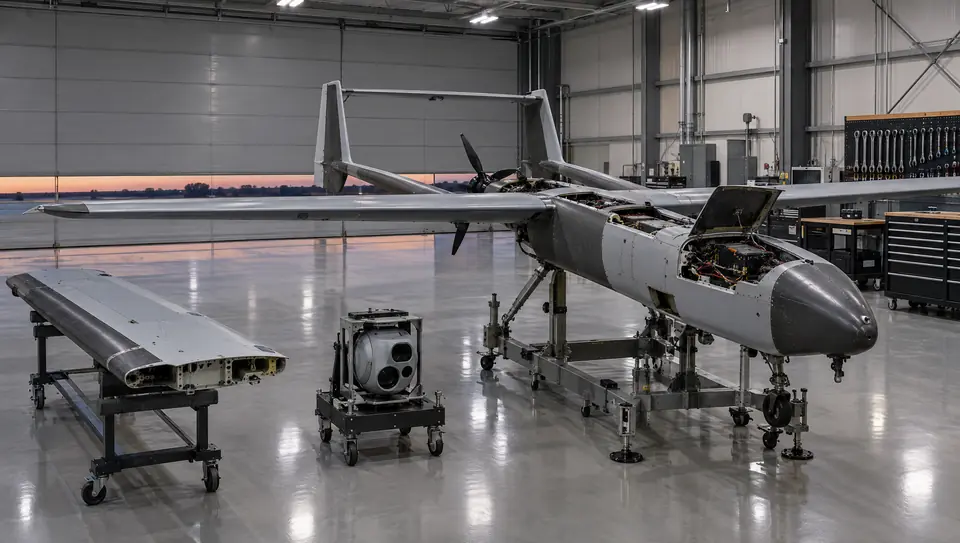
Air
Airframes, uncrewed aircraft structures, and the ground infrastructure that recovers, services, and redeploys them.
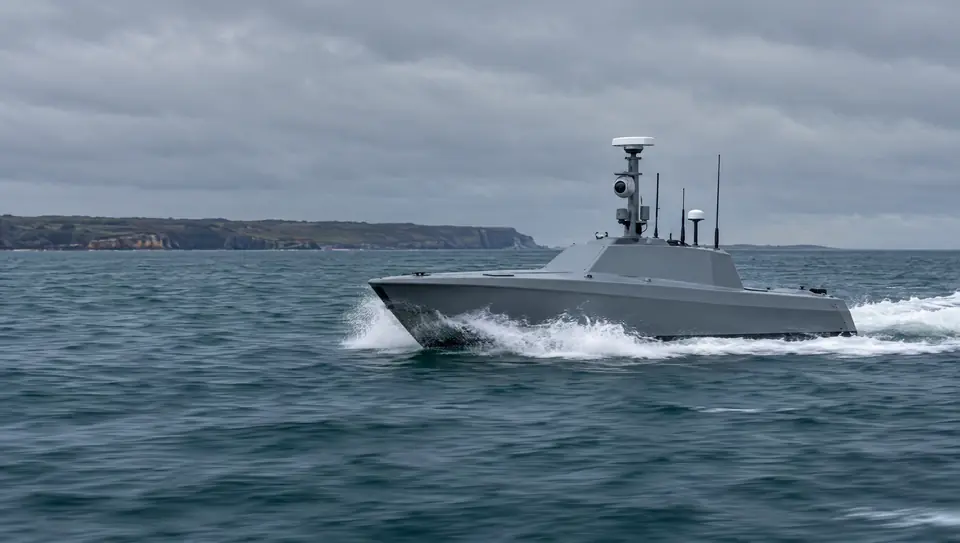
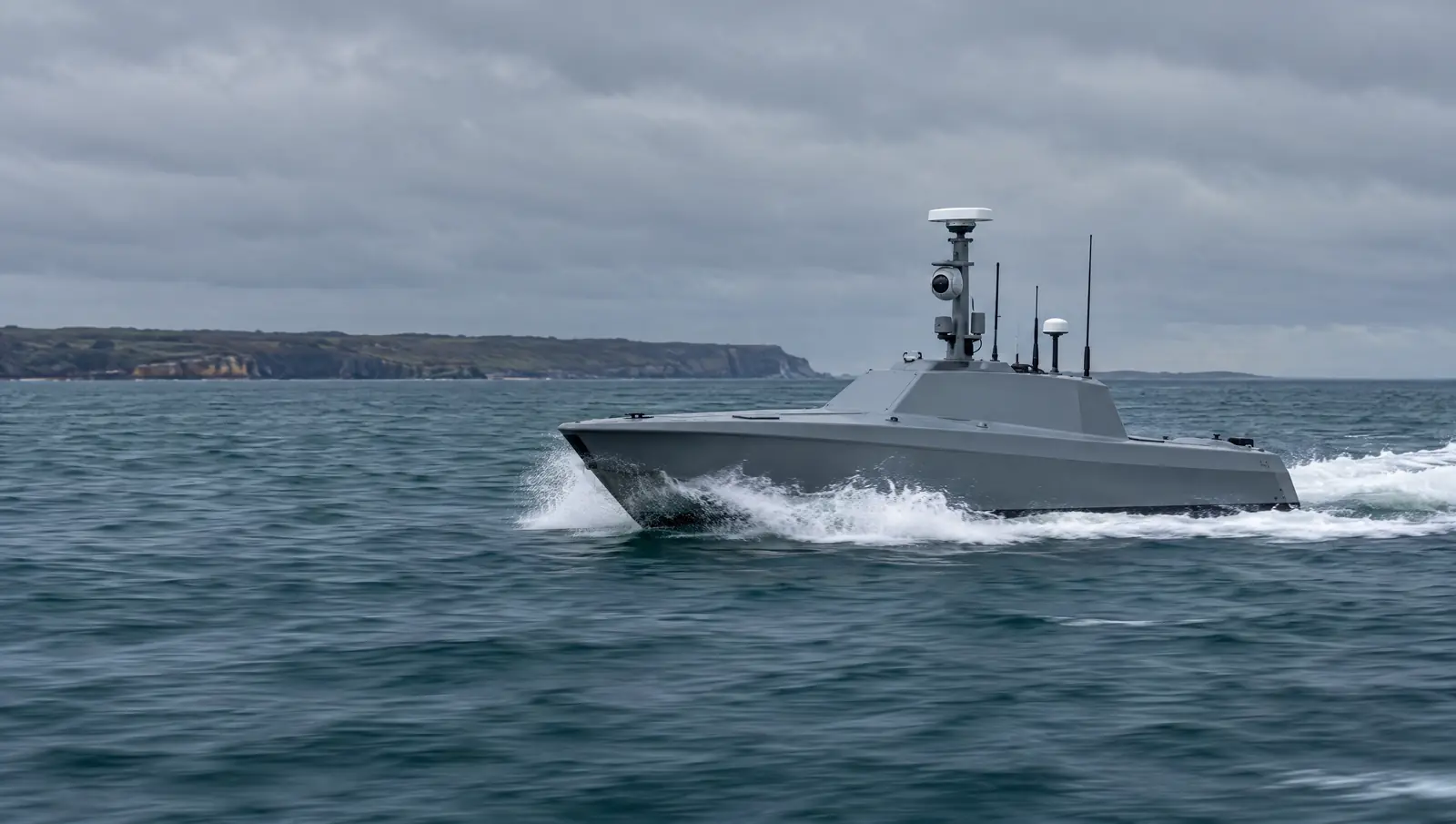
Maritime
Structures and support systems for naval platforms and autonomous surface and subsurface vessels, built to marine and defense standards.
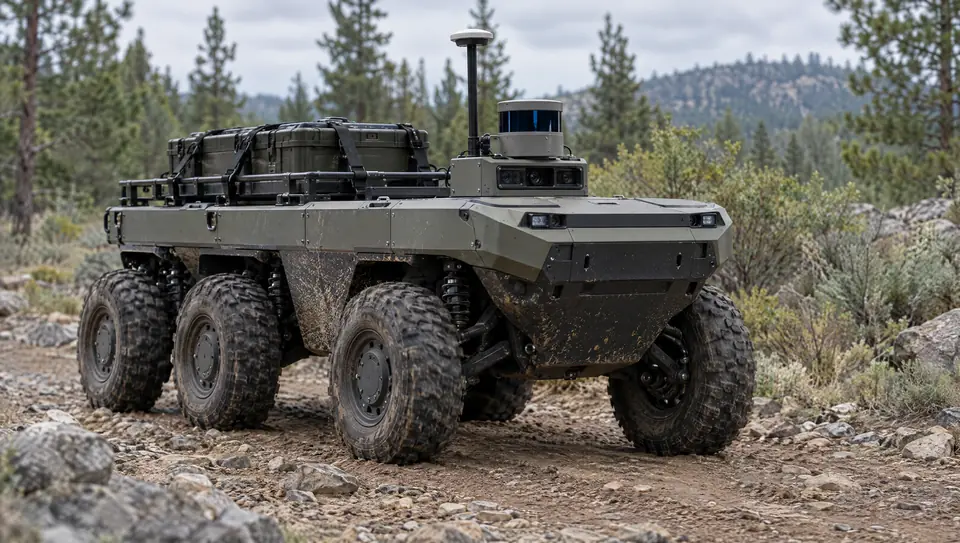
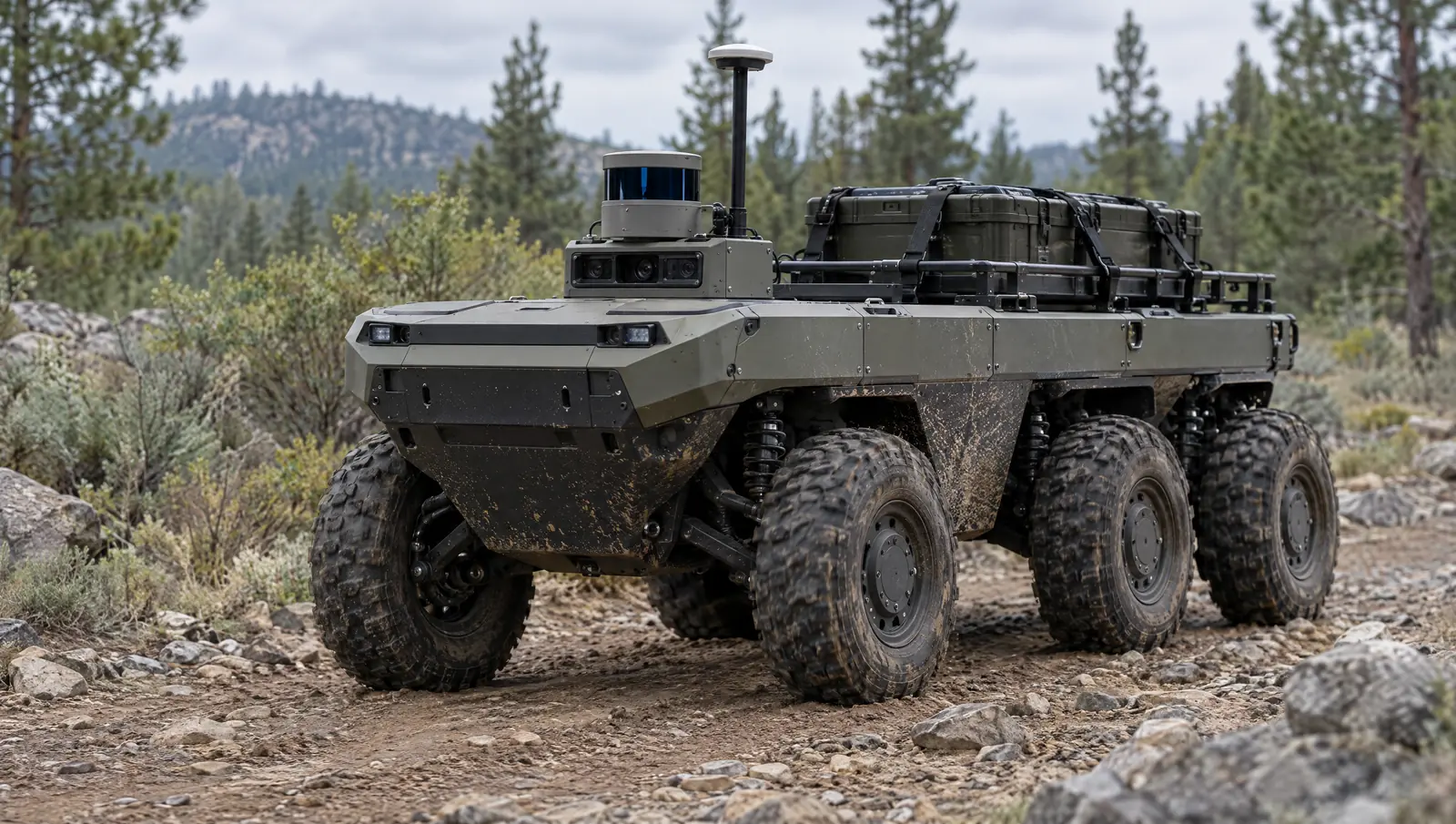
Land + Robotics
Ground platforms, robotic systems, automated production cells, and the support stations that keep robotic fleets in operation.
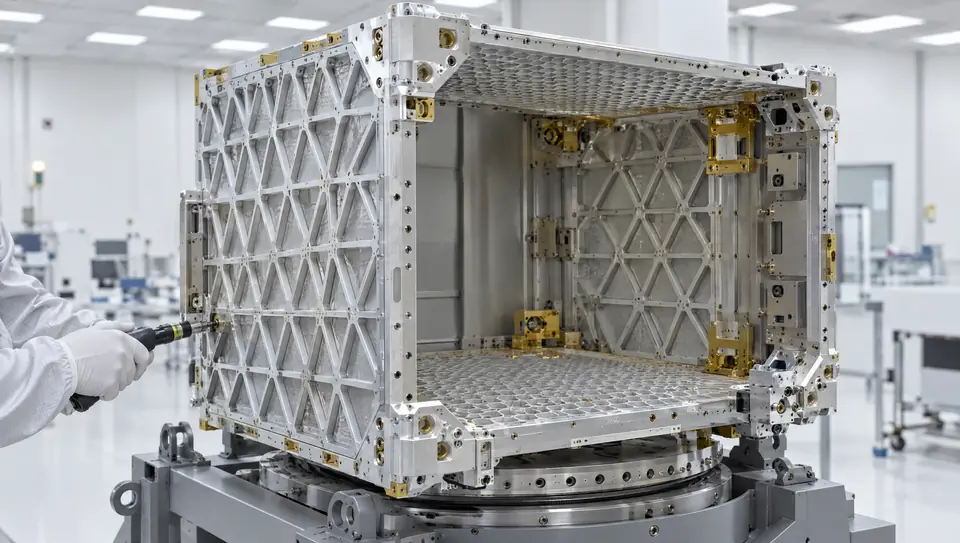
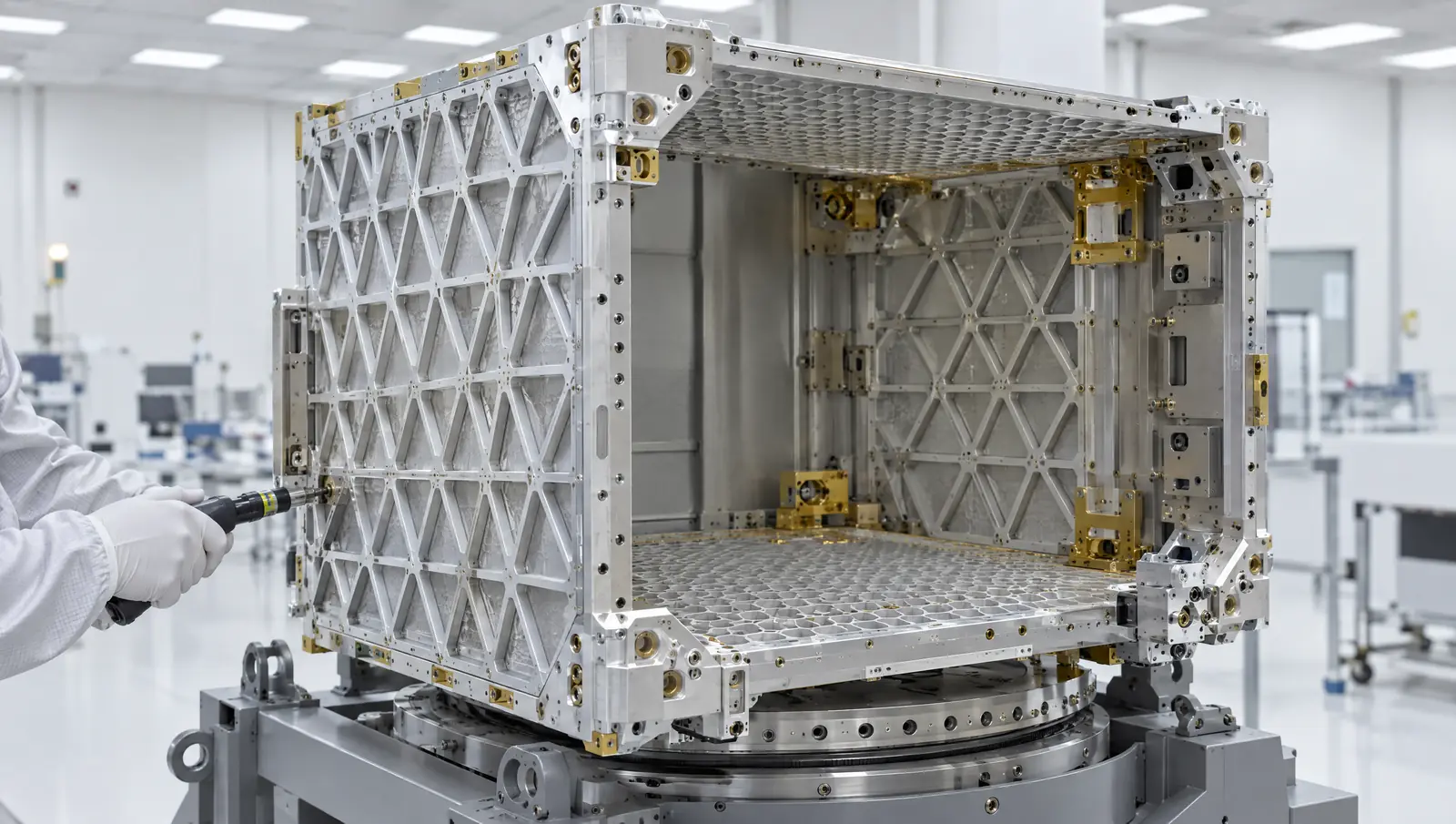
Space
Bus structures, precision mounts, and flight hardware for satellites and orbital infrastructure, with the tolerances and traceability space programs demand.
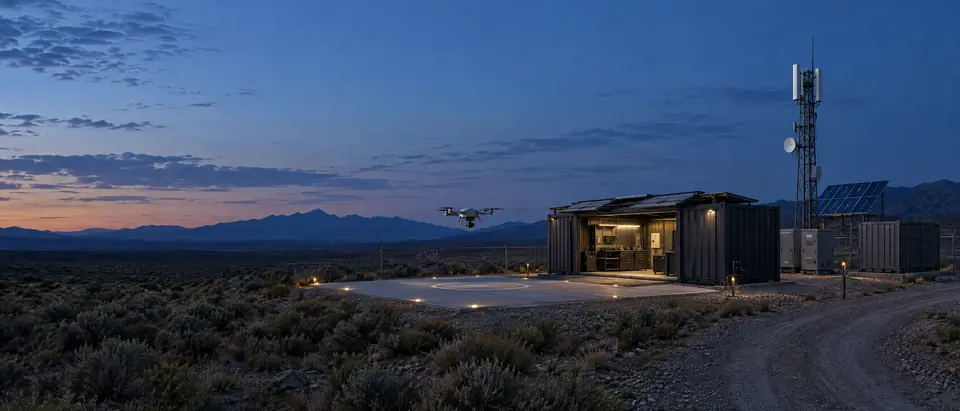
Autonomous Infrastructure
The operating environment autonomous vehicles depend on: recovery, protection, power, payload handling, inspection, and redeployment.
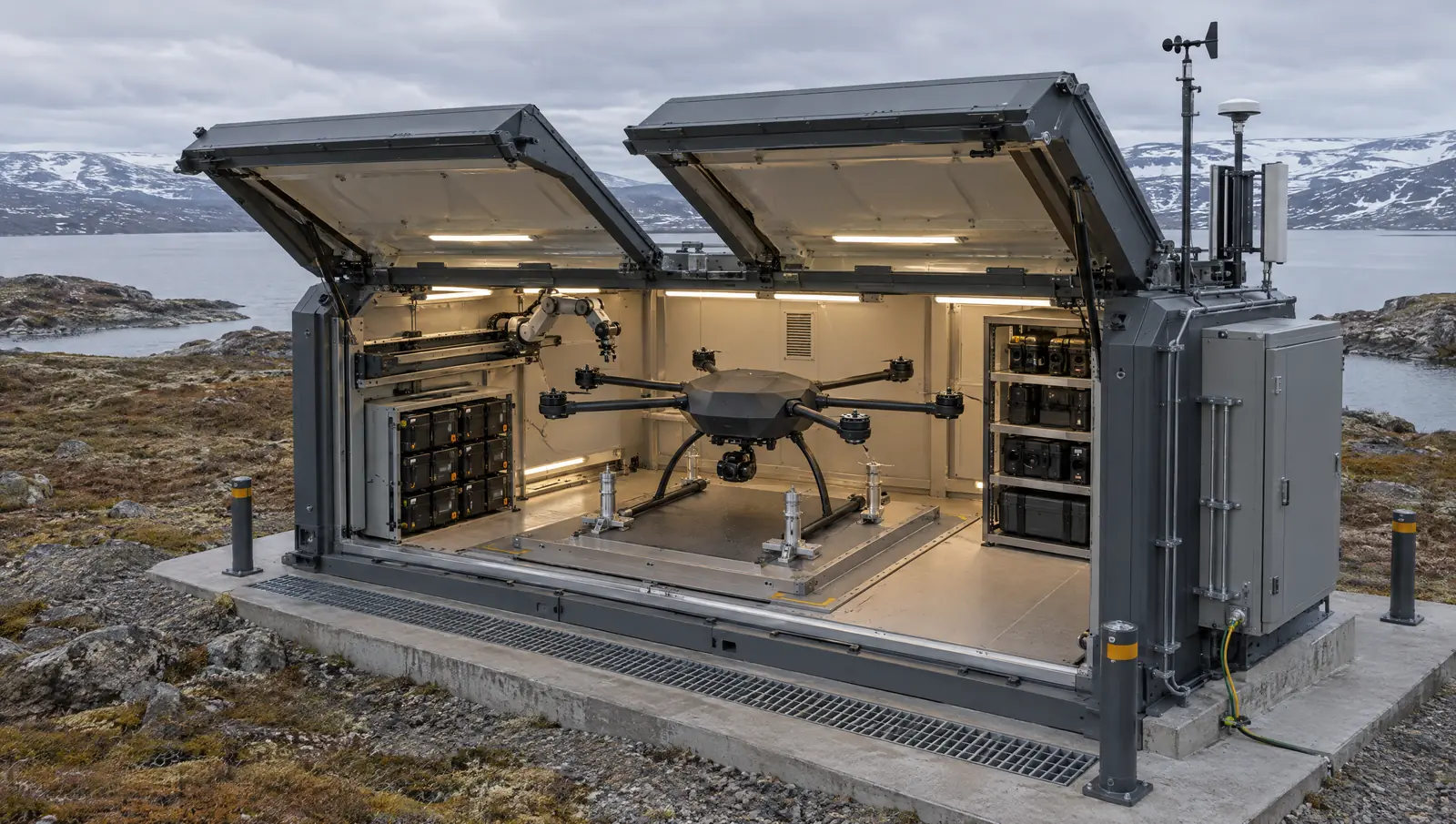
Autonomy requires infrastructure.
Reliable autonomous operations require more than vehicle hardware. Asgard autonomous infrastructure may support:
- Vehicle Protection
- Launch & Recovery
- Charging & Fueling
- Battery Exchange
- Payload Exchange
- Inspection
- Maintenance
- Data Transfer
- Remote Operations
- Mission Readiness
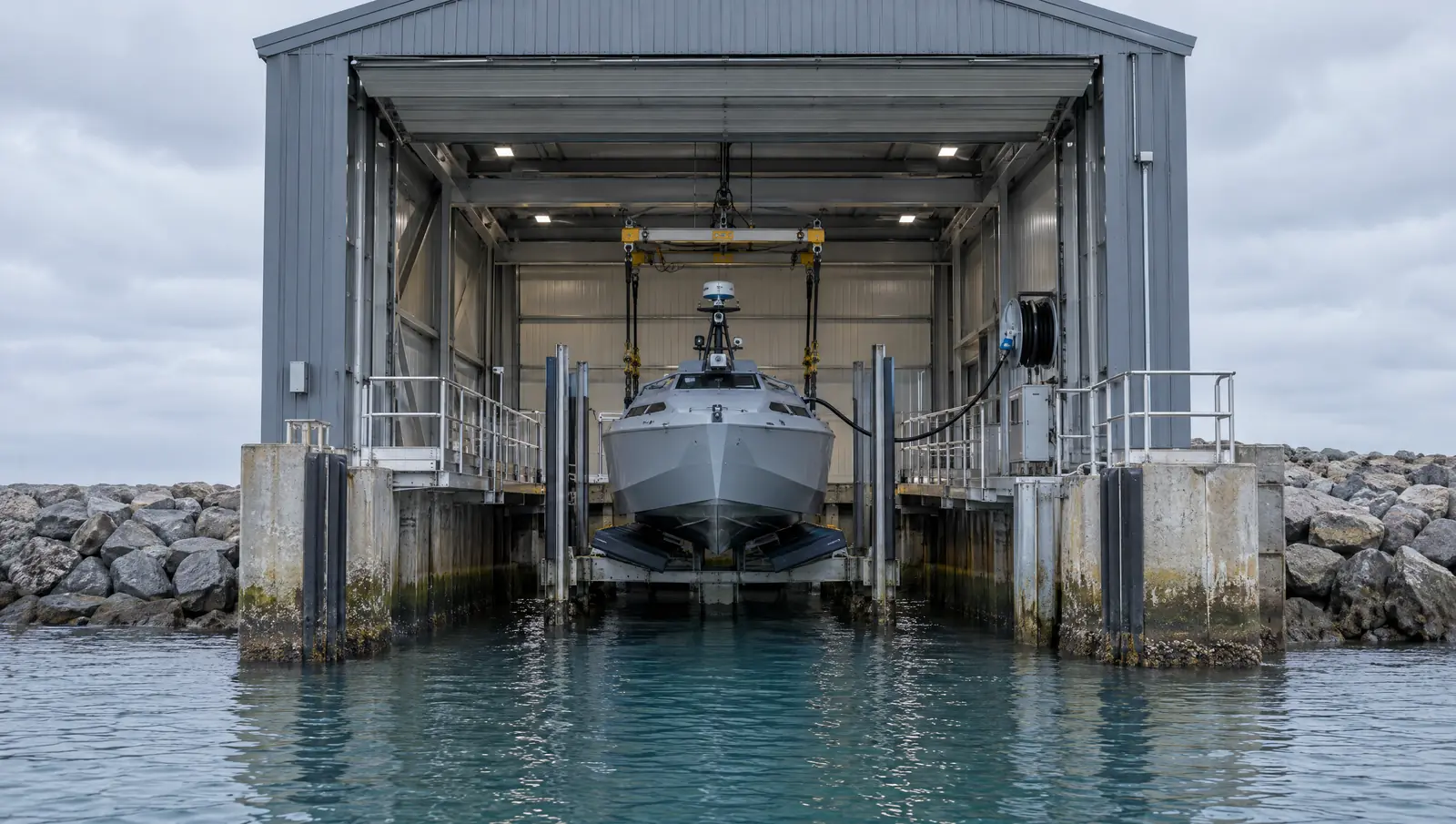
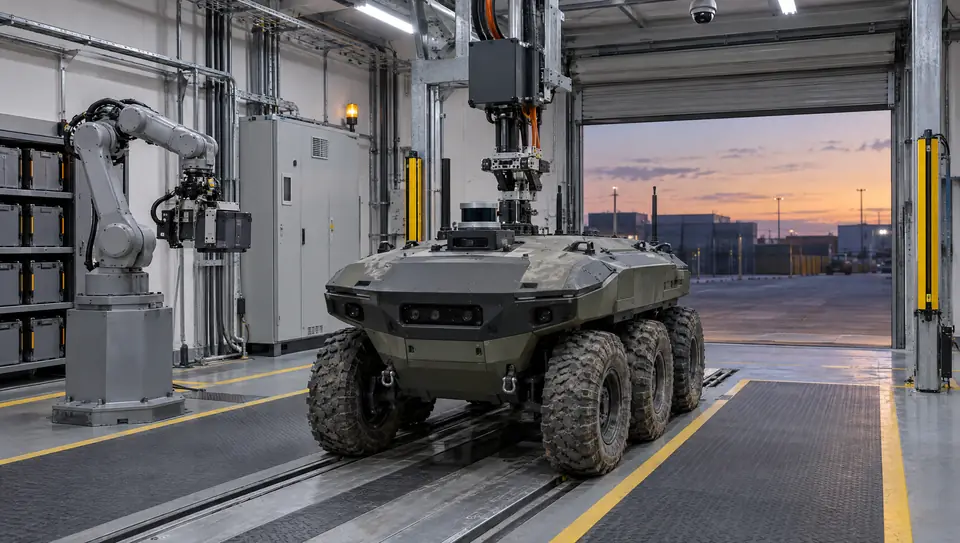
Four stages. One controlled thread.
Technical intent begins with mission requirements and remains controlled throughout execution: through engineering, digital orchestration, industrial execution, and operational life.
Integrated Systems Engineering
Mission objectives translated into requirements, architecture, interfaces, and verification plans: the controlled technical definition every downstream activity traces to.
- Mission
- Requirements
- Architecture
- Interfaces
- Verification
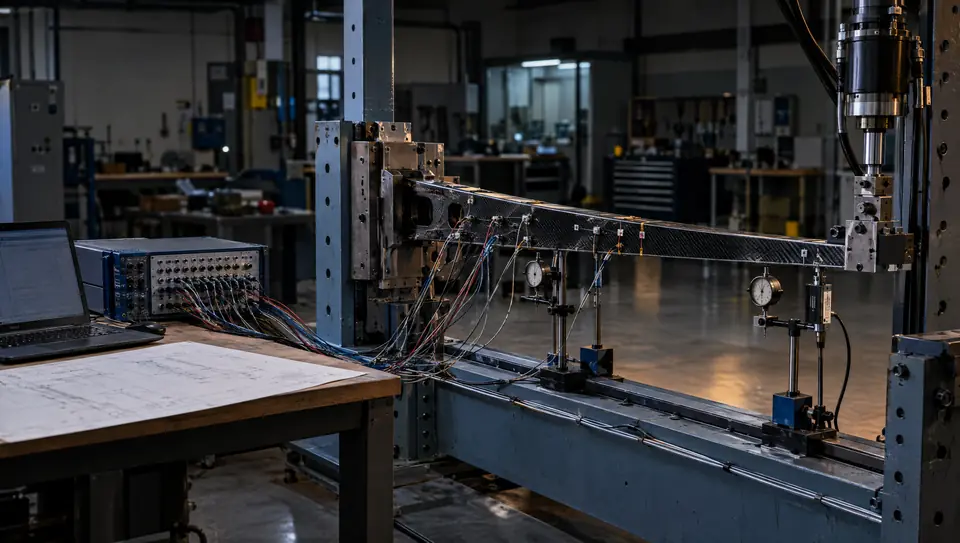 Systems Definition
Launchbelt
The Launchbelt Orchestration Engine is Asgard's digital orchestration engine, in active development. It is designed to connect requirements, engineering, configuration, manufacturing, quality, suppliers, verification, deployment, asset history, and sustainment in one controlled thread.
- Configuration
- Work Packages
- Quality Evidence
- Traceability
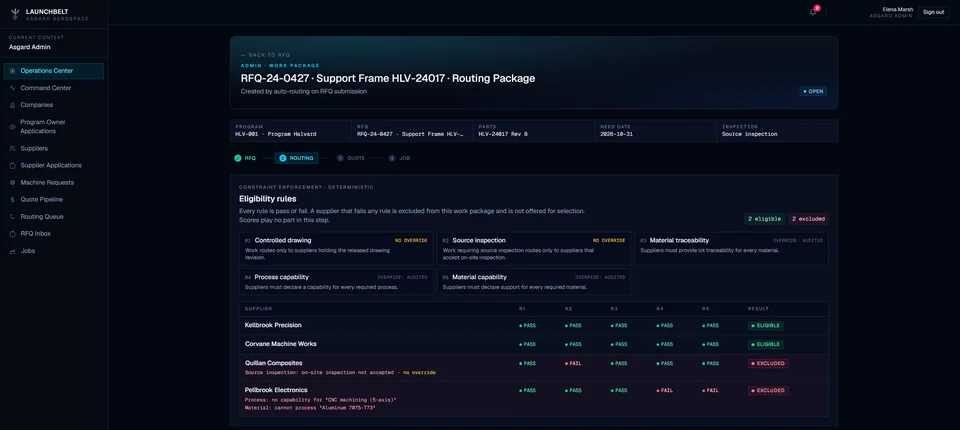 Launchbelt interface shown with fictional program data
Forge
The Forge Industrial Execution Network is the physical counterpart, being built out now. Its architecture coordinates Asgard capability, qualified suppliers, specialized processes, manufacturing, assembly, integration, inspection, testing, logistics, and sustainment execution.
- Machining
- Composites
- Robotics
- Assembly
- Inspection
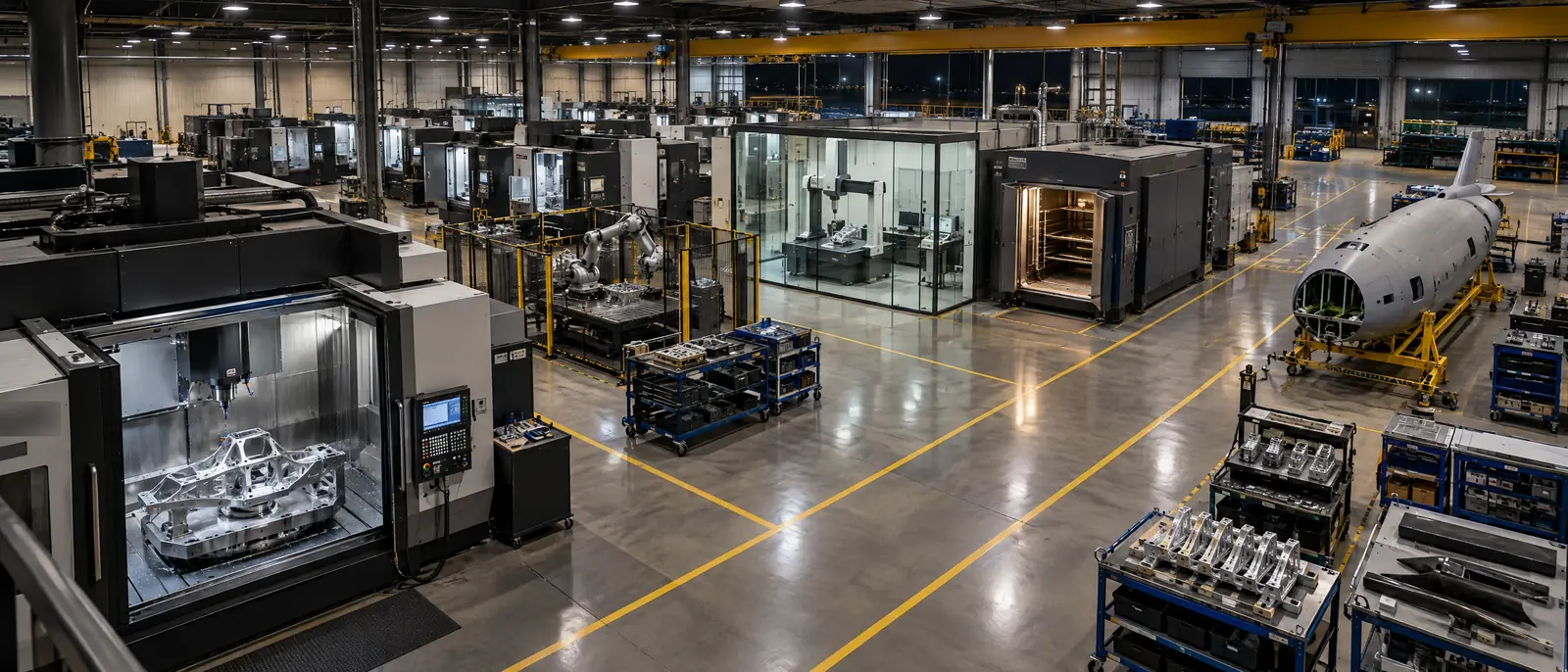 Industrial Execution
Deployment + Sustainment
The system leaves manufacturing and enters the operating environment: installation, commissioning, field deployment, maintenance, asset monitoring, repair, upgrades, and lifecycle support.
- Commissioning
- Field Deployment
- Maintenance
- Lifecycle Support
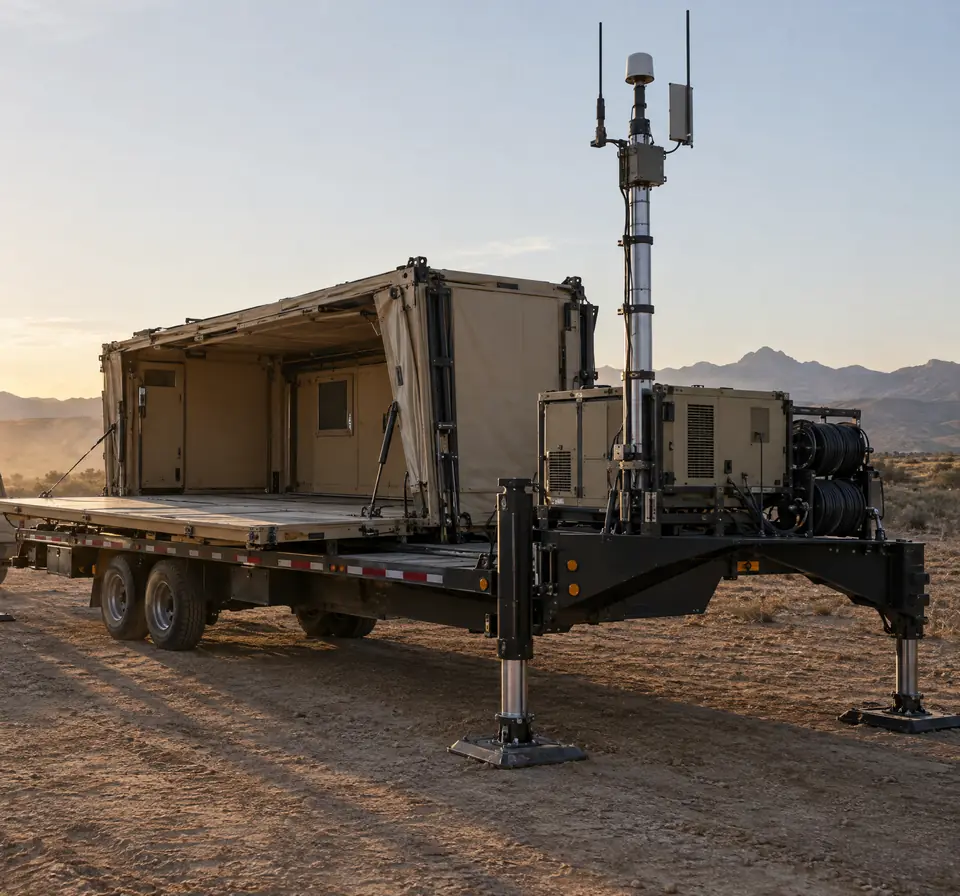 Field Deployment · Illustrative
Technical intent survives physical execution.
A complex system passes through many states between a mission requirement and a maintained, fielded asset. Launchbelt connects those states, so what was required, what was designed, what was built, and what is deployed remain one traceable thread.
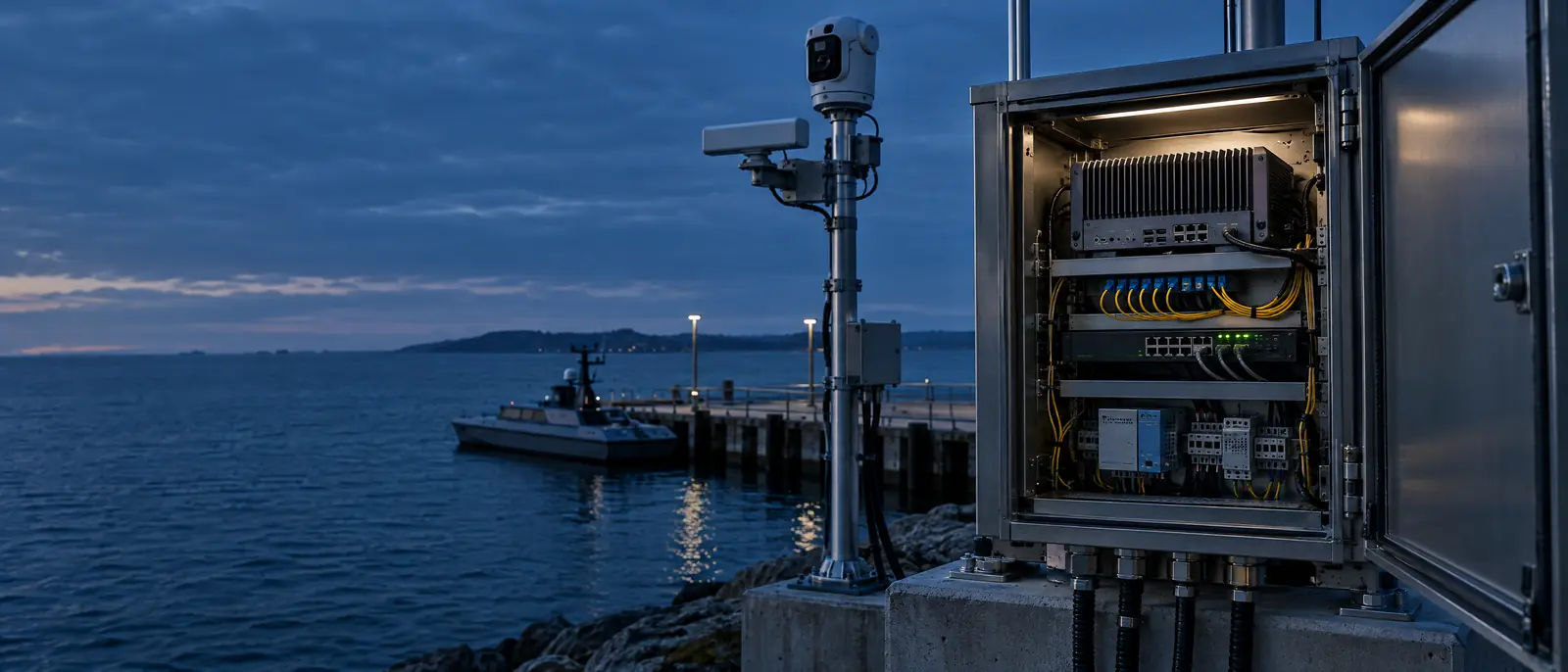
Software. Meet the physical world.
Bifrost is Asgard's reusable software architecture for complex physical systems, in development. It is designed to connect hardware, edge software, events, state, evidence, intelligence, and the applications built on them.
Built to release, held to standard.
Work is executed through Asgard capability and the Forge supplier network as it is qualified, under one engineering, quality, and configuration standard.
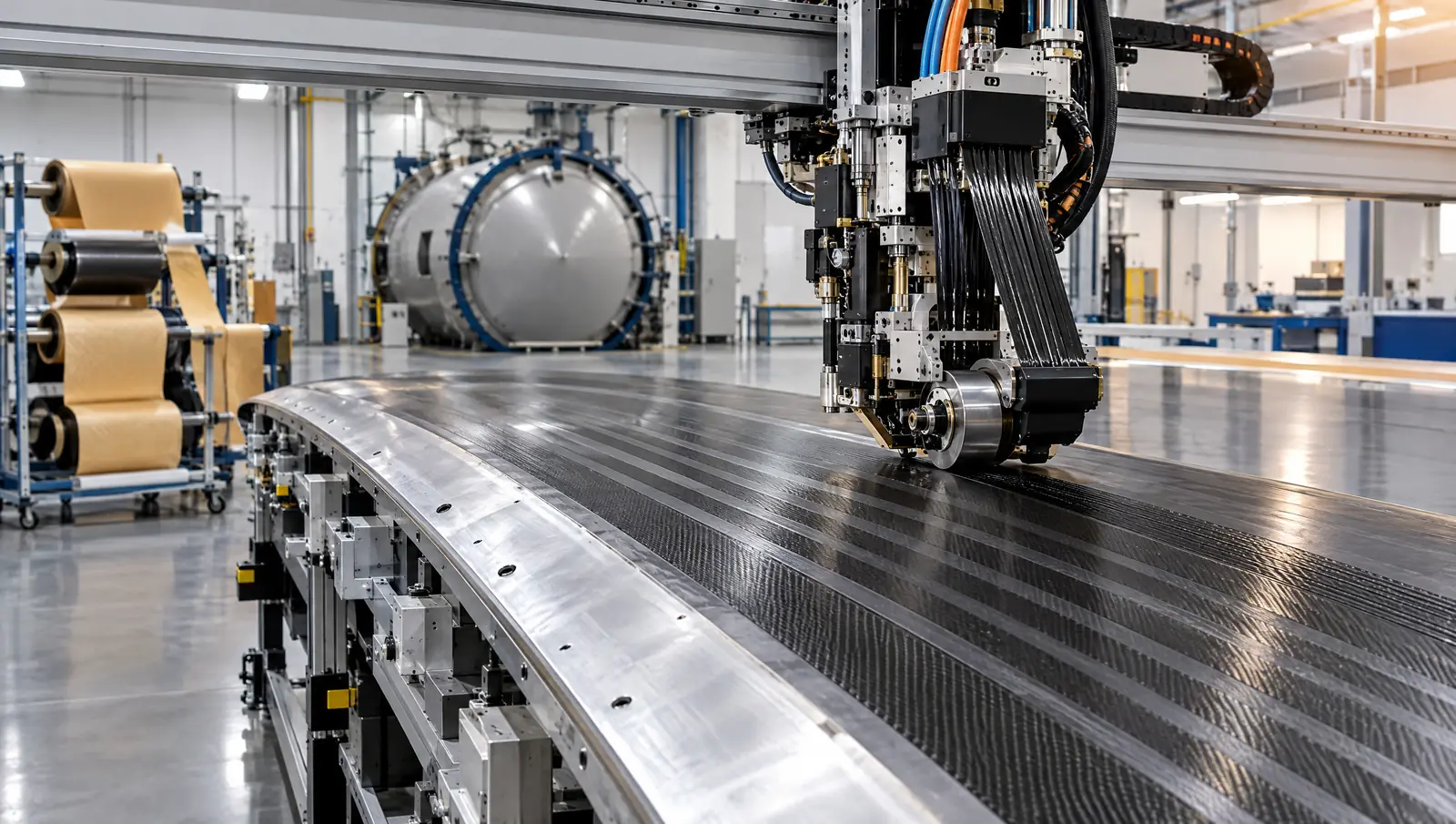
Advanced Composites + Thermoplastics
Composite and thermoplastic structures for airframes, hulls, and enclosures: layup through cure, trim, and inspection.
- Composite Layup
- Thermoplastics
- Structural Assemblies
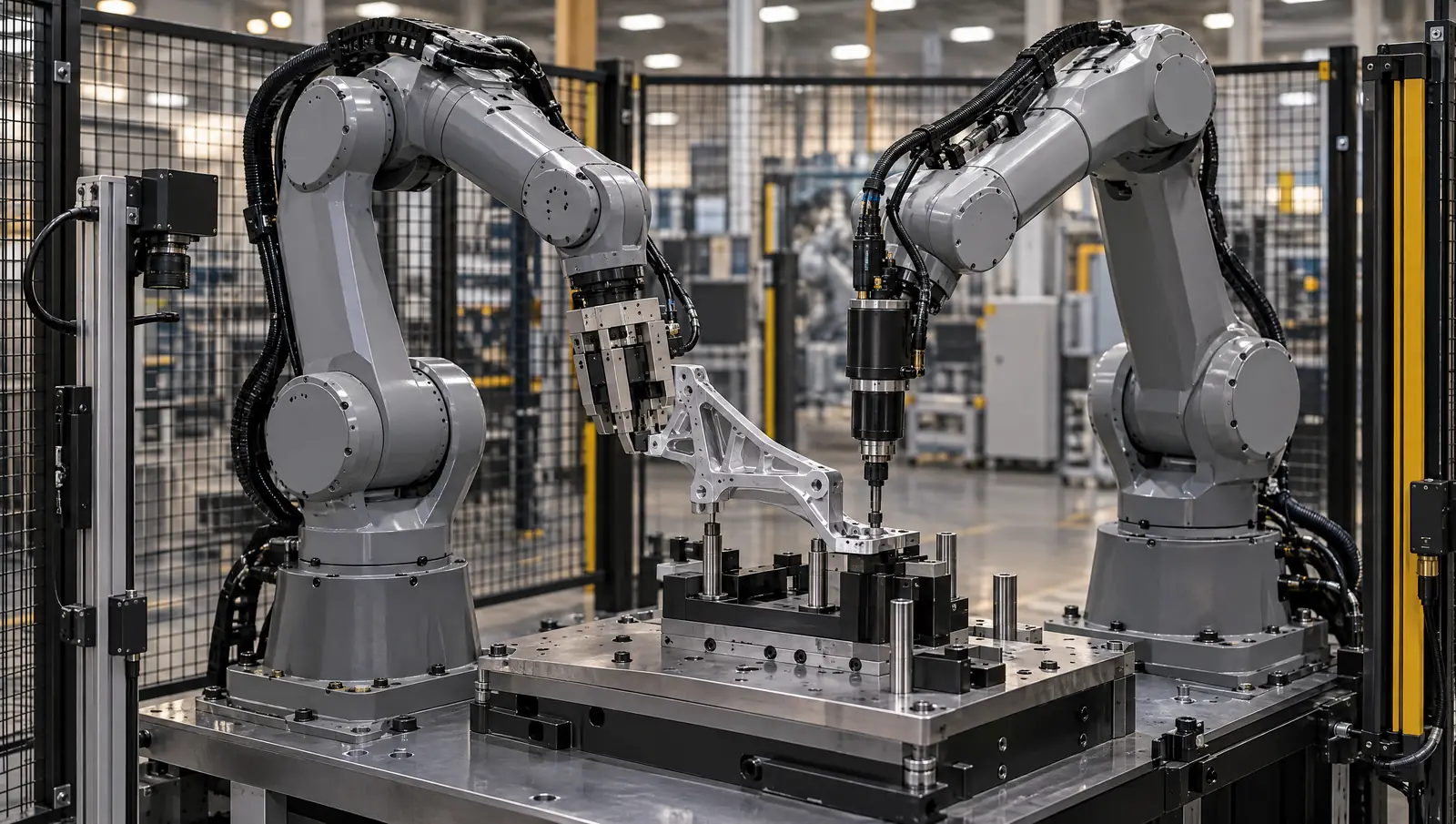
Precision Manufacturing + Robotic Integration
Machined structures, precision motion hardware, automated work cells, and robotic systems, for programs that field robots and factories that run on them.
- 5-Axis Machining
- Robotic Cells
- Precision Motion
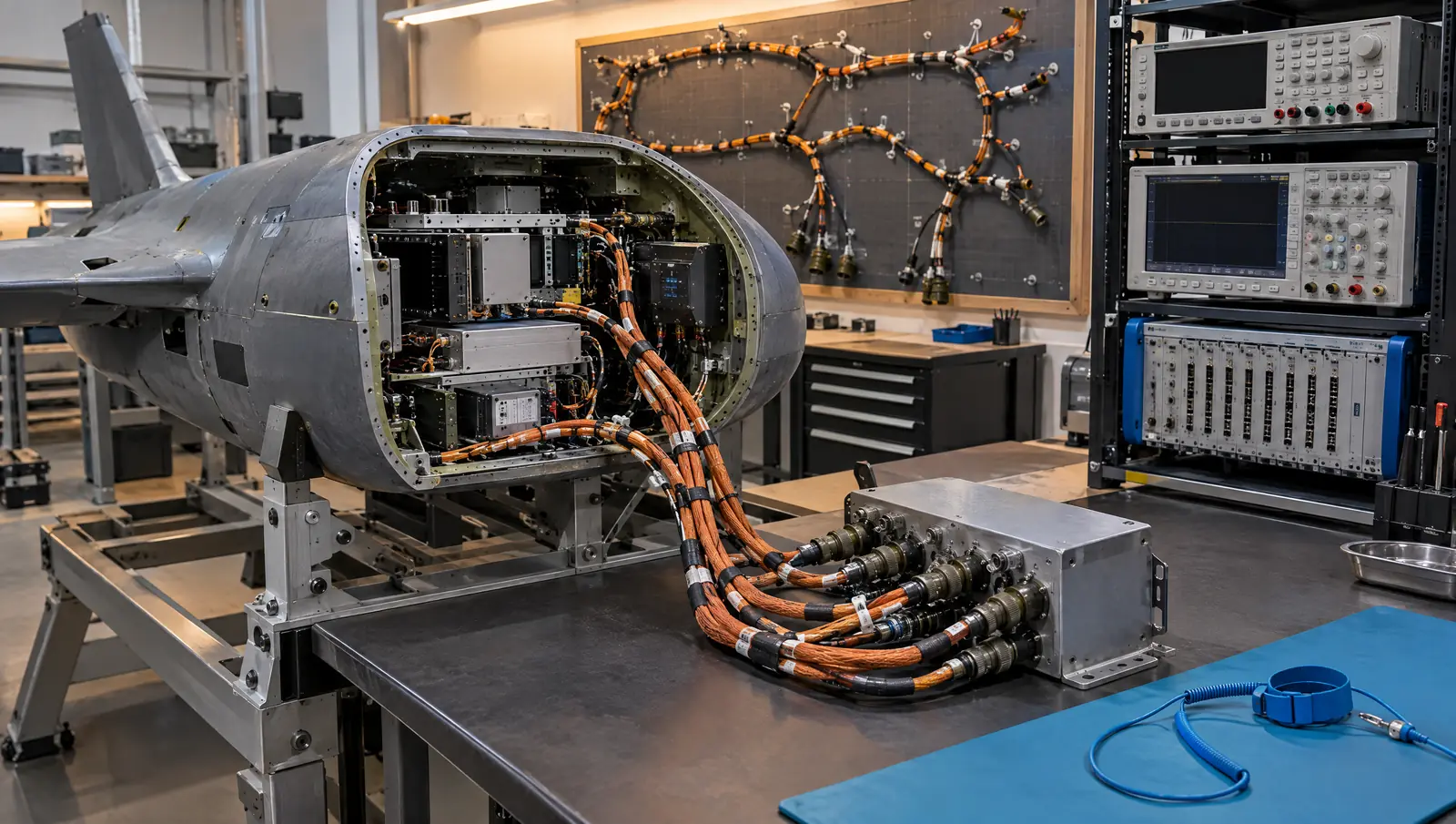
Electrical + Systems Integration, Inspection + Test
Subsystems brought together into one operational configuration: integrated, inspected, and verified with evidence captured against the requirements they close.
- Electrical Integration
- Systems Integration
- Inspection + Test
Controlled. Traceable. Evidenced.
Complex systems fail at the handoffs. Asgard's model is built so what was required, designed, built, and deployed remain one controlled configuration.
Configuration Integrity
One released technical definition, held under change control from requirement to fielded asset.
Traceability
Full genealogy from raw material to deployed, maintained hardware.
Objective Evidence
Inspection and verification records captured against the requirements they close, as the work happens.
Controlled Execution
Every node in the network, internal or external, executes released work under the same discipline.
Security
Program information handled with the controls advanced systems work requires.
Mission to sustainment, one program.
Asgard stays involved across the lifecycle rather than handing the customer from one disconnected organization to another.
Mission Analysis
Understand the operational problem.
Concept Development
Shape candidate solutions against the mission.
Requirements
Define what the system must accomplish.
Architecture
Define functions, subsystems, and interfaces.
Engineering
Develop the physical system.
Prototype
Build and evaluate representative hardware.
Manufacturing
Execute released work through Forge.
Integration
Bring subsystems together into one configuration.
Verification
Close requirements with objective evidence.
Deployment
Install and commission the operational system.
Production Scale-Up
Convert the design into controlled rate production.
Sustainment
Maintain readiness, configuration, and repairs.
Product Improvement
Feed operational learning back into the system.

Define the mission.
Engineer the system.
Execute the program.
Forging Brilliance, Destined by Design.